Book Talk
Are you looking for an enriching experience to captivate your audience?
Then, welcome to Monica Macias's world, where the power of words transforms into captivating experiences.
Monica invites you on a journey through the pages of her book, Black Girl From Pyongyang. She is open for bookings for author visits and book talks to ignite minds and inspire hearts.
So, whether you're …
- a seasoned TV or talk show looking for fresh perspectives,
- a forward-thinking company seeking to inspire your team beyond their daily work routine,
- an educational institution nurturing a passion for diverse literature and topics,
- a haven-seeking library craving community engagement,
- a grassroots community group eager for meaningful conversations,
- a spiritual congregation aiming to inspire its members beyond the prayers field,
- or simply an individual yearning to gather friends for an unforgettable afternoon –
Monica's book talks promise to ignite curiosity and spark dialogue, thought-provoking discussions to ensure an unforgettable experience that transcends the ordinary.
If you would like to join Monica Macias on a literary journey for one captivating conversation at a time, then, please contact our friendly team, today, to make a booking or discuss your idea for your book talk! Click here to CONTACT US!

A Meaningful Evening at Eastbourne’s Congress Theatre
Sharing My Story on Equatorial Guinea’s Independence Day,12th October 2016.
I had the privilege of presenting Black Girl from Pyongyang: In Search of My Identity at the Congress Theatre in Eastbourne, before an audience I estimated at between 1,000 and 1,400 people. The theatre appeared to be full, and the attention I felt from the audience throughout my presentation, followed by the applause at the end, made the evening a particularly rewarding experience.
This was an especially meaningful occasion for me, not only because 12 October is Equatorial Guinea’s Independence Day, but also because my father, Francisco Macías Nguema, signed the Act of Independence in 1968. To share my story on this anniversary was therefore deeply personal. It connected my own life journey with a defining moment in my country’s history and with the legacy of a struggle for national independence that continues to shape how I understand history, identity and the right of a people to determine their own future.
A personal story rooted in history
My presentation explored the questions of identity, belonging, culture and power that have shaped my life. Born in Equatorial Guinea and sent to Pyongyang, North Korea, as a child, I grew up navigating different cultural, political and social systems. My journey subsequently took me across continents, from North Korea to Spain and beyond, and eventually into an academic career in London.
This life experience has given me a distinctive perspective on how culture and political systems shape our understanding of ourselves and others. It has also made me question who has the authority to define our identities, interpret our histories and determine which narratives are accepted as legitimate.
These questions lie at the heart of my memoir. My story is personal, but it also speaks to broader questions of cultural identity, representation, colonial history and the unequal power to define other people.
Reclaiming the history that belongs to us
Speaking on Equatorial Guinea’s Independence Day brought these questions into sharper focus. The anniversary carries particular weight for me because my father was the man who signed the Act that formally marked our country's independence from Spain. It is a date that connects my family history to the history of our nation.
Independence is not simply the formal end of colonial rule. It also raises the question of who gets to tell a nation's history after independence, whose voices are heard, and whose experiences are marginalised or excluded.
My memoir is an attempt to document a part of that history from the perspective of someone whose life was shaped by it. It challenges the assumption that the history of Africa, or the lives of Africans who have crossed cultural and political boundaries, can be adequately understood through narratives produced elsewhere.
For me, reclaiming history means asserting our right to tell our own stories, draw our own conclusions and challenge representations that fail to reflect our lived experiences. It means recognising that our identities cannot be reduced to the categories others impose upon us.
This is also why my story extends beyond Africa. Growing up in North Korea and living across different cultural environments have taught me that identity is neither fixed nor confined by geographical borders. It is shaped by history, education, lived experience and our encounters with different societies and systems of thought.
The audience’s response
From the stage, I could feel the audience’s attention throughout the presentation. The applause at the end was particularly encouraging and gave me a strong sense that my story and the questions I raised had resonated with those present.
Addressing such a large audience made the occasion memorable, but what mattered most to me was the opportunity to share a perspective that challenges conventional assumptions about identity, culture and history.
As an author and interdisciplinary scholar working across cultural studies, fashion studies and global cultural exchange, I am interested in how power shapes the ways we see ourselves and others. The question Who Gets to Define Us? therefore extends beyond my own biography. It invites us to examine the systems of authority that determine whose knowledge is valued, whose experiences are recognised, and who is permitted to speak with authority about other people's lives.
These questions are relevant to discussions of colonialism, cultural representation, global inequality and the hierarchies that continue to shape our world.
An evening to remember
I am deeply grateful to the organisers for inviting me to speak at the Congress Theatre and for making it possible to share my story on such a significant date. It was a privilege to bring together my personal journey, my country's history and the wider questions that continue to inform my work.
Thank you to everyone who attended and gave me their attention. The audience’s response made the evening a memorable one, and I hope the presentation encouraged further reflection on identity, historical memory and the importance of hearing stories directly from those who have lived them.
Who gets to define us? Who gets to tell our history? And whose voices are we prepared to hear?
These are not merely academic questions. They concern power, representation and the right to define ourselves.
Our stories matter. Our histories matter. And we must have the freedom to tell them ourselves.

Moments before taking the stage at Eastbourne’s Congress Theatre on 12 October 2026
"Who Gets to Define Us" at NYU Shanghai
On 22 September 2026, I walked into NYU Shanghai with a mix of nerves and gratitude. I had been given the chance to share my story through a book talk, and the question at the center of it all was: Who Gets to Define Us.
I didn’t know how the evening would go. But just like at HKU, the room filled up—95 people, a full house. I was honestly humbled. To see so many people choose to spend their time listening, thinking, and engaging with this story meant more than I can say.
What stayed with me most was the warmth. From the reception to the conversation, from the questions to the quiet nods, everything felt encouraging. The feedback I received was so positive and generous. Some even told me they wished there was a Chinese version of my book so they could learn more about the story. That request touched me deeply—it made me feel that the story is reaching beyond language, and that maybe it’s time to bring it home in a new way.
Thank you, NYU Shanghai, for opening your doors and giving me this beautiful opportunity. And thank you to everyone who came, listened, and shared a piece of the evening with me. I left with a full heart and a quiet hope that this conversation will continue.
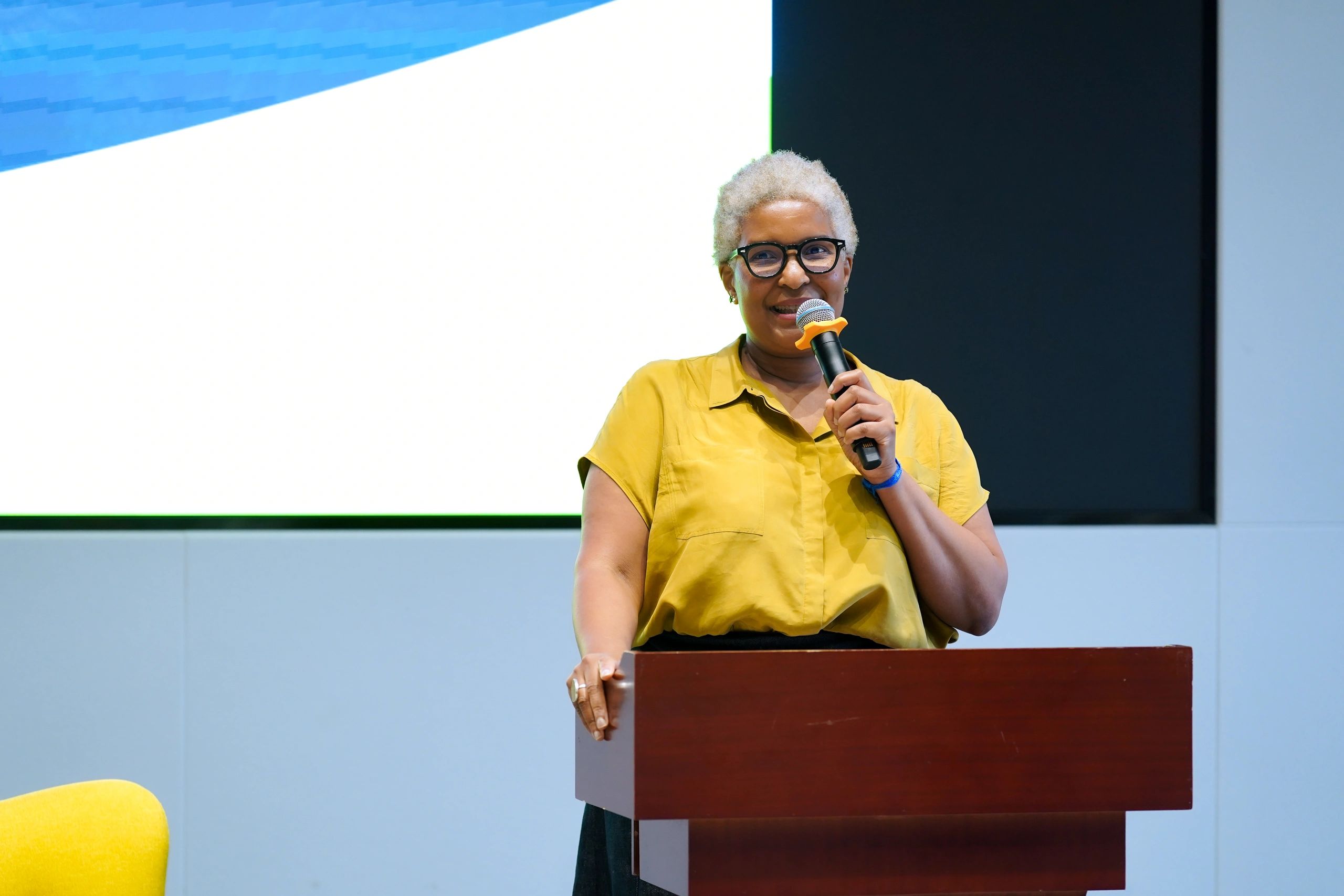
A Heartfelt Reflection on My Book Talk at HKU 2026
My book talk at HKU on September 16th was such a meaningful experience for me. I truly enjoyed our conversation and the Q&A—and from the warmth and engagement in the room, I think people enjoyed it as well.
The Q&A session especially felt excellent. I was particularly moved by the exchange with a young girl who asked if I was biased and privileged. I answered honestly: yes, I am aware that I am biased, just like everybody else—it is human nature. To her second question, I acknowledged my privilege and explained that what truly matters is self-awareness and how one uses that privilege to improve our societies and help others who are not privileged. The room nodded in response, and I felt a genuine sense of connection.
Later, I received feedback describing the talk as "so intelligent, insightful and engaging." I am grateful for the way you helped shape it. I’m also really happy that I met such nice people and had the chance to connect with them; it made the visit all the more special.
Afterward, Daniel, the organiser, nailed it with the choice of the restaurant. Dinner at Galbi Town has stayed with me as well. The food took me straight back to my childhood in Pyongyang—something I didn’t expect and won’t soon forget.
Thank you to everyone who made that day so memorable.

East China University of Political Science and Law — Shanghai
From Pyongyang to T Hardy's town...

Speaking alongside a fantastic lineup of authors and thinkers at the 2025 DLF Dorchester Literary Festival.
Brighton

12 & 13 April 2024 - Brighton Book Events
Monica Macias was in Brighton on Fri 12th & Sat 13th attending the following 3 events:
1. the Brighton Bookshops Signing Tours (incl. Waterstones Brighton, Kemptown Bookshop Brighton, The Feminist Bookshop, Afrori Books)
2. a conversation with Carolynn Bain (owner of Afrori Bookshop) at Jubilee Library
3. and the amazing Supper Club Dinner.
See photos below.


U3A Ealing Event! 9 May 2024
Seeing the world through different eyes!
Seeing the world through different eyes!
Seeing the world through different eyes!
U3A Event presentation
Seeing the world through different eyes!
Seeing the world through different eyes!
109 people in the hall enjoyed the presentation and a further 39 viewed via Zoom.